
People occasionally ask me what the price per square meter is “on the island,” as though it were a single number I could quote the way you’d quote an exchange rate. I understand why they ask — it would be convenient. But I always tell them the honest thing: there is no single number. If anyone gives you one without asking which street, be careful, because it usually means they haven’t actually looked at where you’re buying.
Île Saint-Louis is small enough to walk end to end in under ten minutes, and on paper it all sits inside the fourth arrondissement, which stretches from here to the Marais and the Hôtel de Ville. But averaging the island into a fourth-arrondissement price is close to meaningless. This is one of the smallest, most self-contained real estate markets in Paris, and it behaves like one: a handful of streets, a building stock that is fixed and carefully protected — nothing new gets built here — and a pool of buyers who are, frankly, buying the island as much as the apartment.
The clearest example of what that does to a price is the river. On Quai d’Orléans, where several of the island’s grandest apartments look straight across the water at Notre-Dame and Île de la Cité, real sales over the past few years cluster around €32,000 per square meter. Walk two streets back to Rue Budé — still close enough to hear the water — and the same size apartment trades closer to €14,400. That isn’t a modest premium. It’s more than double, for a difference that on a map looks like nothing at all.
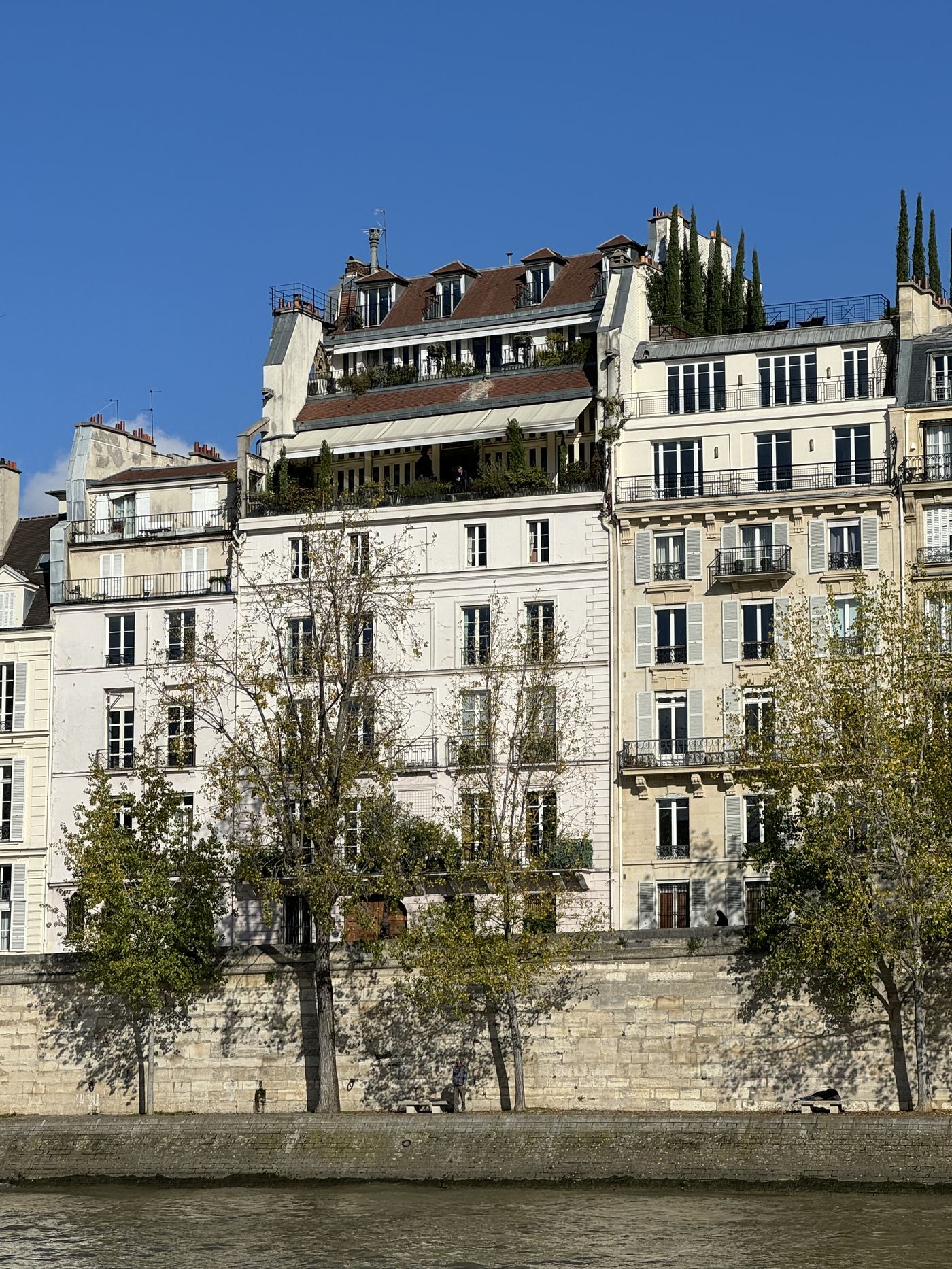
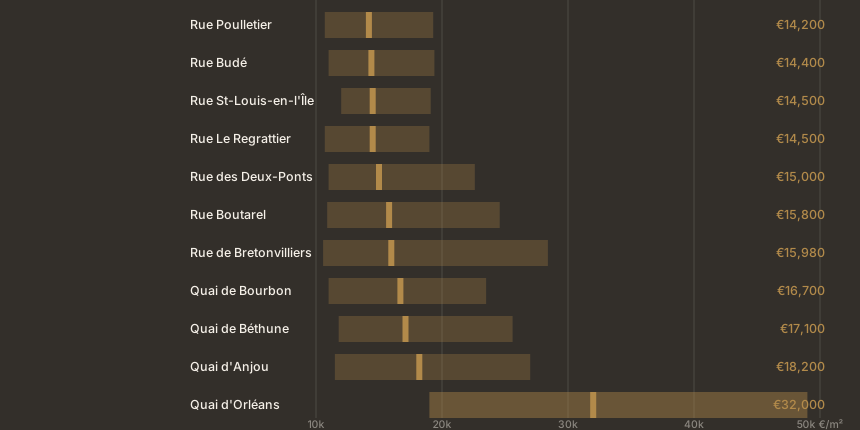
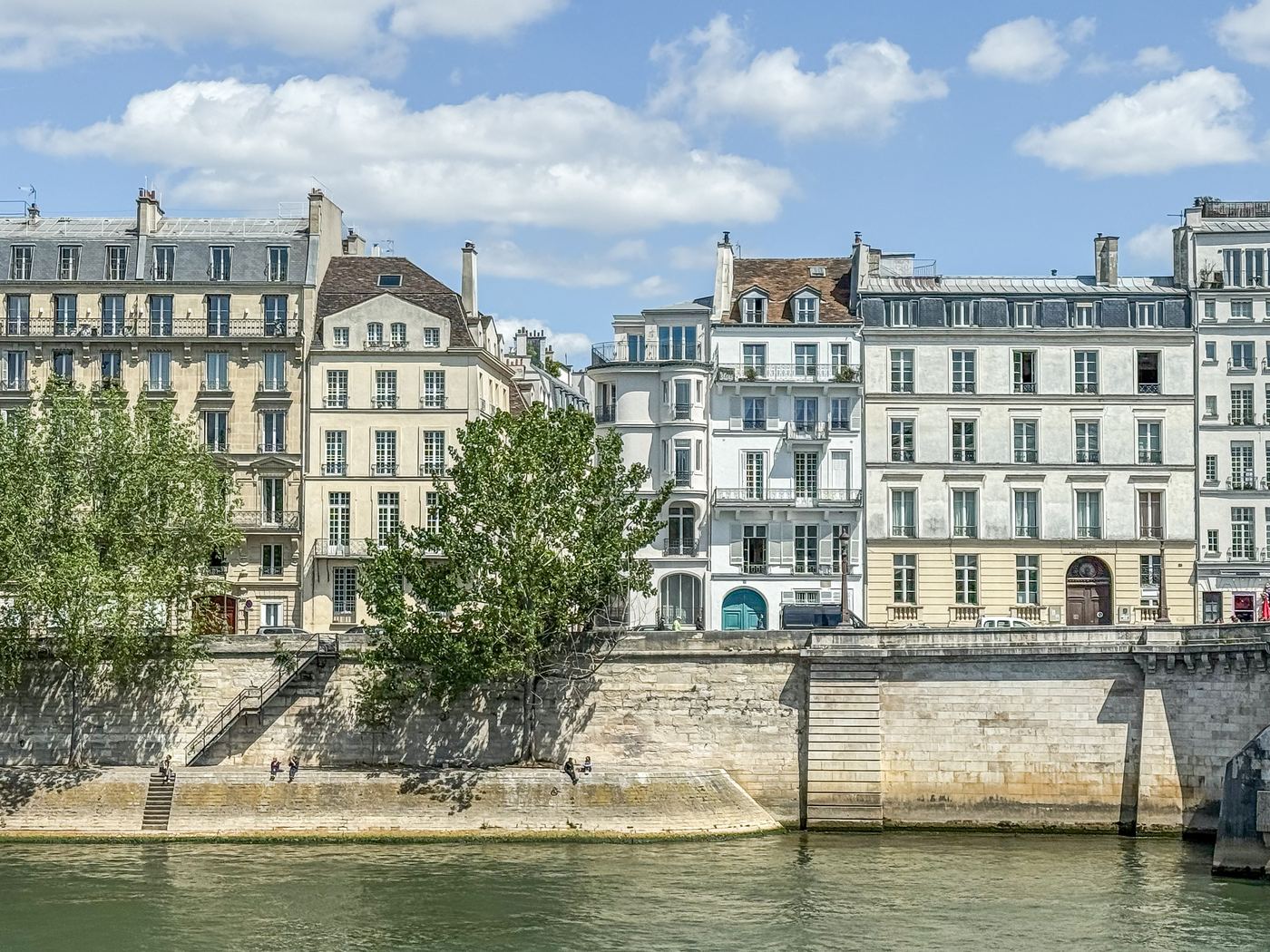
And here is the detail that a quick glance at a map won’t tell you: not every quai here commands the same premium. Three of the island’s four riverfront streets — Quai de Bourbon, Quai de Béthune, Quai d’Anjou — sit within a fairly tight band of each other, all comfortably above the interior streets but not wildly apart. Quai d’Orléans is the exception. It prices nearly double its nearest quai neighbor, driven by a run of genuinely grand, historic apartments that simply don’t have an equivalent anywhere else on the island. A river view here is not one variable. It’s which quai, which bridge, which building’s history, how the light falls in the afternoon.
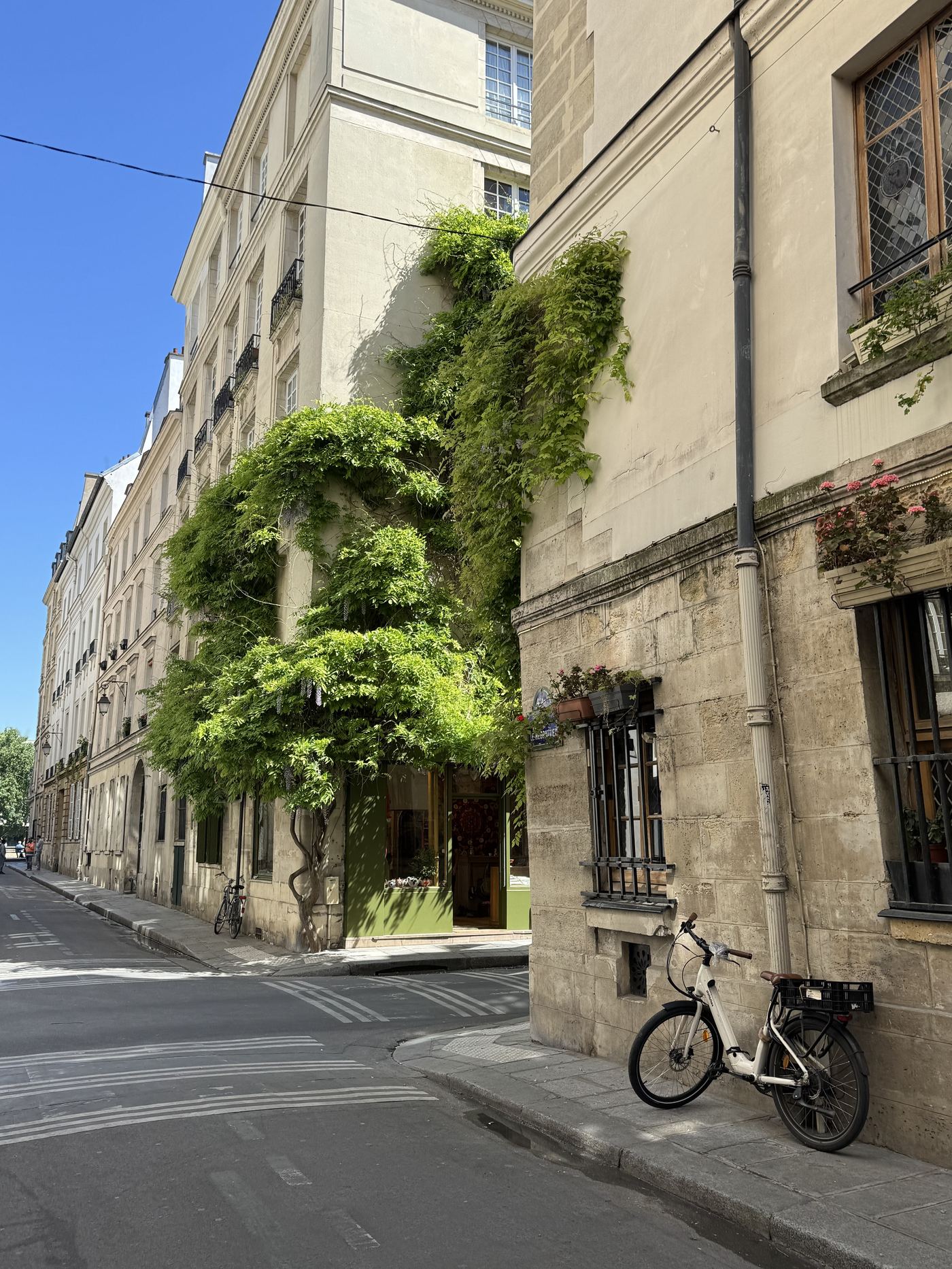
The same is true away from the river. Rue Boutarel and Rue Budé sit a few hundred meters apart, both quiet interior streets, neither with a water view — and one prices meaningfully above the other. Nothing about their position on a map explains that gap. It’s building stock, ceiling height, the mix of studios versus family-sized apartments that happen to have traded there recently. This is why I price by street, not by neighborhood, and why I check every fresh sale against the specific address before I quote a client a number.
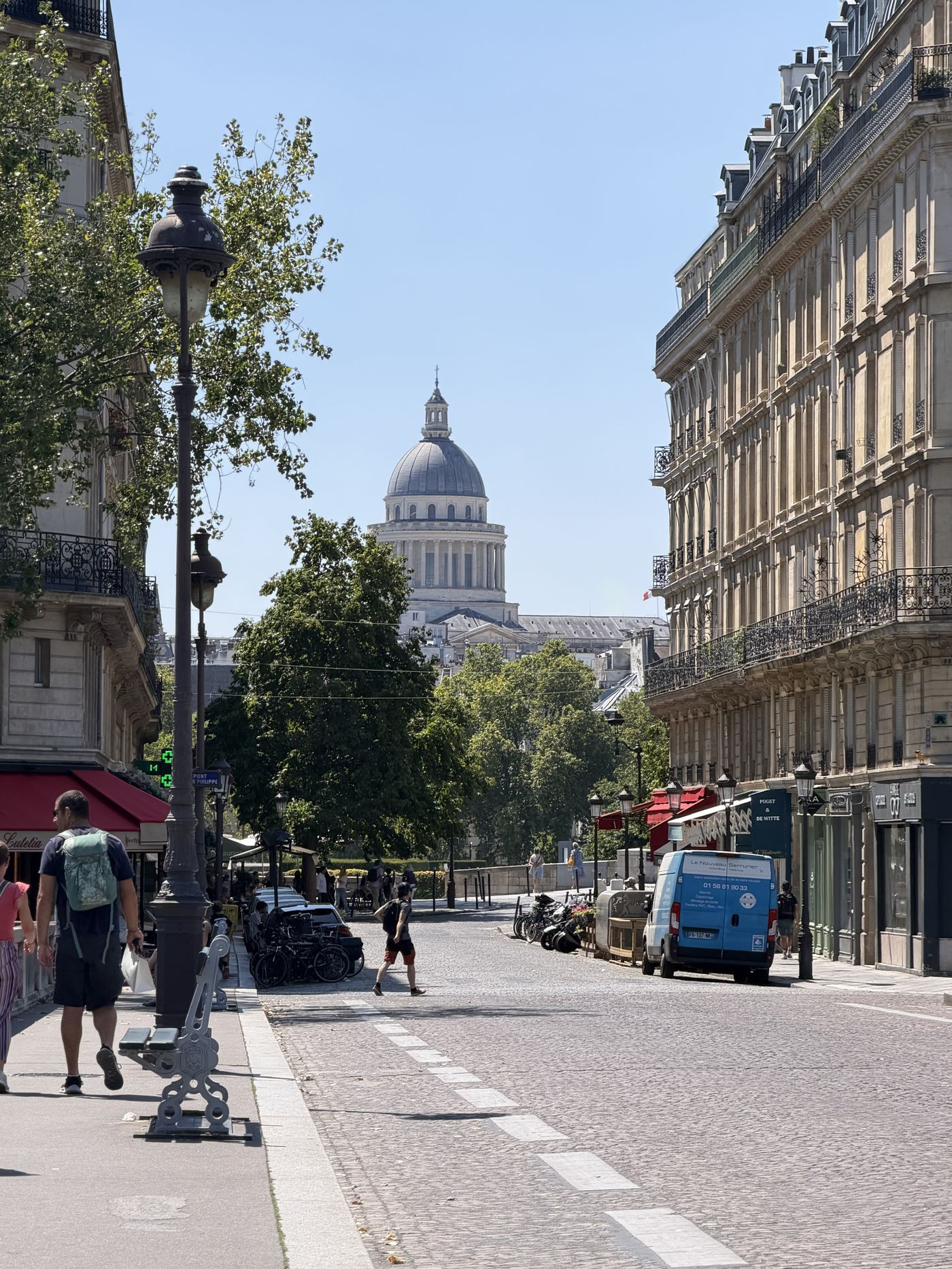
None of this means the island is immune to the broader market. I track real sales here closely, and the data is honest about it: 2024 was a genuinely soft year, both in price and in how many sales happened at all, echoing the correction that hit financing and buyer confidence across Paris more broadly. What’s different about the island is what happened after.
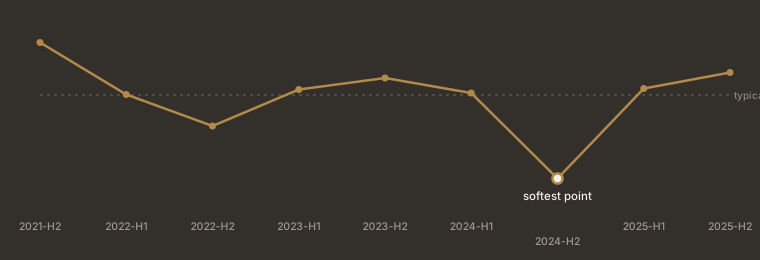
There is always a buyer for Île Saint-Louis. It’s rare enough, and wanted enough, that it never truly sits unsold. But by 2026 I noticed the urgency had softened in a specific way: buyers who loved the island but weren’t fixed on it started looking two minutes away — along the river in the fifth arrondissement, or in the Marais — where prices had more room to move and sellers were more willing to negotiate. The island held its value. It simply stopped being the only answer for people who wanted central, historic, and close to the water.
That’s the part of this market a spreadsheet will never show you: which streets are quietly underpriced against their own history, which ones are having a moment, and which buyers are genuinely willing to wait for the right address instead of settling for the right deal. It’s a small island. Knowing it properly takes more than an arrondissement average.
Thinking about selling on Île Saint-Louis or Île de la Cité?
Get an instant property estimate